
March 11, 2026
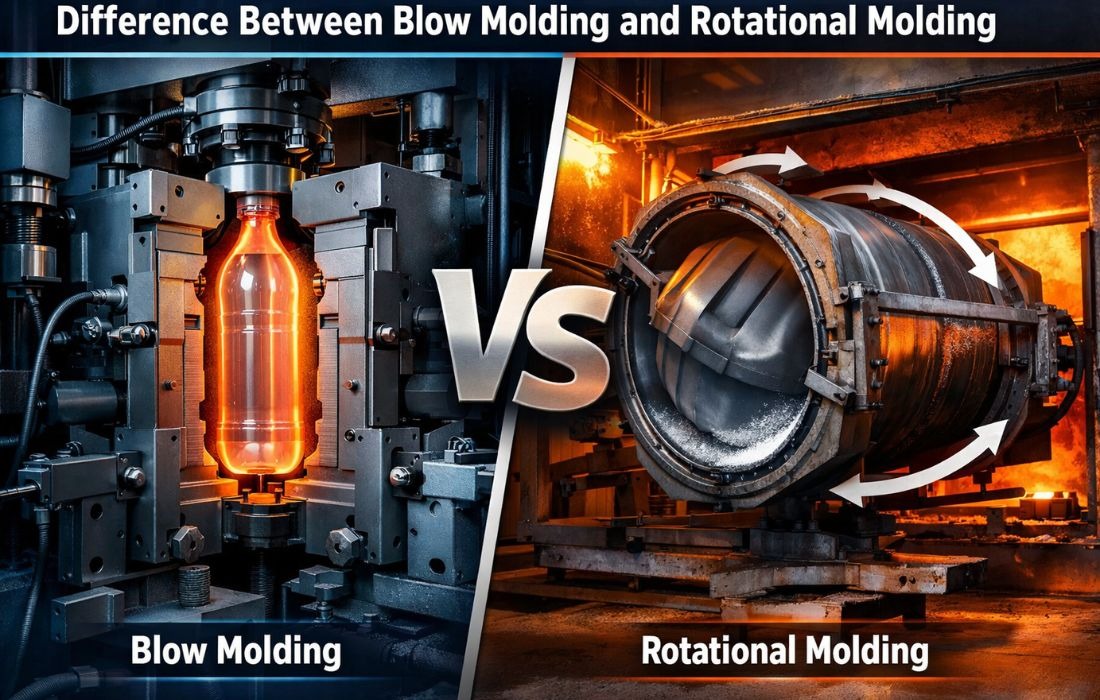
Blow molding and rotational molding are two common methods used to make plastic products. Many industries use these processes to produce items like bottles, tanks, containers, and hollow parts. Both methods can create strong and durable products, but their working style and output are different.
People often get confused when choosing between these two processes. The right choice depends on factors like product shape, size, cost, and production volume. This is why it is important to understand the difference between blow molding vs rotational molding before making a decision.
This guide will help you understand both methods in a simple way. It will also explain the key differences, benefits, and limitations so you can choose the right process based on your needs.
Blow molding is a manufacturing process used to make hollow plastic parts. This method is mainly used for products like bottles, containers, and tanks. In this process, melted plastic is shaped into a hollow form using air pressure.
A tube of hot plastic, called a parison, is first placed inside a mold. Air is then blown into it, which pushes the plastic against the walls of the mold. This gives the product its final shape. Once the plastic cools down, the mold opens and the finished item is removed.
This process is widely used in industries like packaging, automotive, and consumer goods. It is popular because it can produce large quantities of products in a short time.
Blow molding is often compared with rotational molding when selecting the right method. In the discussion of blow molding vs rotational molding, this process is known for its speed and efficiency in mass production.
Blow molding is widely used because it offers several practical benefits, especially for making hollow plastic products in large quantities.
Fast production speed - This process is ideal for mass production. Manufacturers can produce a large number of items in less time, which helps meet high demand.
Cost-effective for large volumes - Production cost per unit becomes lower when items are made in bulk. This makes it a good choice for industries that need high output.
Suitable for complex hollow shapes - Blow molding can create products with detailed shapes and uniform thickness. It works well for bottles, containers, and similar items.
Blow molding is useful in many cases, but it also has some limitations that should be considered before choosing this process.
Limited to hollow products - This method is mainly used for hollow items like bottles and containers. It cannot be used for solid or complex internal structures.
High initial setup cost - Molds and machines used in blow molding can be expensive. This can be a concern for small-scale production.
Less design flexibility - Some complex shapes and detailed designs are difficult to achieve with this process. Design options can be limited compared to other methods.
Blow molding uses a clear sequence of steps to form hollow plastic products. Each stage controls shape, thickness, and final quality.
Raw plastic, usually in pellet form, is fed into a heated barrel. Heat and rotation soften the material and turn it into a molten state. Temperature control is important here because uneven heating can affect product quality.
The melted plastic is pushed out through a die to form a hollow tube called a parison. The size and thickness of this parison decide the final thickness of the product. Proper control at this stage helps avoid weak spots.
The parison is placed between two mold halves. The mold then closes tightly, sealing the bottom and holding the plastic in position. The shape of the mold defines the final design of the product.
Compressed air is injected into the parison through a blow pin. Air pressure pushes the soft plastic outward so it sticks to the inner walls of the mold. This step gives the product its exact shape and size.
Cooling starts while the plastic is still inside the mold. Air or water cooling systems are used to bring down the temperature. Slow and even cooling helps maintain proper shape and strength.
After cooling, the mold opens and the formed product is taken out. At this stage, the product is solid but may still have extra material attached.
Excess plastic, also called flash, is removed from the edges. The product may go through basic finishing if required. After this, it is ready for use or packaging.
Rotational molding, also known as rotomolding, is a process used to make hollow plastic products. This method is commonly used for items like water tanks, storage containers, playground equipment, and large hollow parts.
In this process, plastic powder is placed inside a mold instead of using melted plastic like in blow molding. The mold is then heated and slowly rotated in different directions. This movement spreads the plastic evenly on the inner surface of the mold.
As the heat increases, the plastic powder melts and sticks to the mold walls. Over time, it forms a uniform layer that takes the exact shape of the mold. After proper heating, the mold is cooled, and the solid product is removed.
Rotational molding is often compared in the discussion of rotational molding vs blow molding because it offers better thickness control and is suitable for larger products.
Rotational molding is preferred for many applications because it offers good control over shape and strength, especially for large hollow products.
Uniform wall thickness - This process spreads plastic evenly inside the mold. It helps create consistent wall thickness, which improves product strength and durability.
Ideal for large hollow products - Rotational molding works well for making big items like tanks and containers. It can handle large sizes without major issues.
No joints or weak points - Products are made in one single piece. This reduces the chances of leakage or breakage at joints.
Rotational molding has many benefits, but there are some limitations that should be considered before choosing this process.
Longer production time - This process takes more time compared to blow molding. Heating and cooling cycles are slower, which affects overall output.
Not suitable for high-volume production - Mass production is not very efficient with this method. It is better suited for medium or low production quantities.
Limited material options - Only certain types of plastic powders can be used. This reduces flexibility when selecting materials.
Rotational molding follows a controlled process where heat and rotation shape the plastic inside a mold. Each step ensures even thickness and proper strength.
Plastic powder is first measured based on the required product size and wall thickness. This powder is then placed inside the mold. Correct quantity is important because it directly affects strength and thickness.
The mold is closed tightly and locked. Proper sealing ensures that the material stays inside during rotation and no leakage happens.
The closed mold is moved into a heating chamber. The temperature is raised gradually so the plastic powder can melt properly. Heat control is important to avoid uneven melting.
The mold rotates slowly in two directions at the same time. This movement allows the melted plastic to spread across all inner surfaces. Rotation speed is carefully controlled to maintain even coating.
Plastic powder starts melting and sticks to the mold walls. Layer by layer, the material builds up and forms a uniform thickness. No pressure is used in this process, which helps avoid stress in the material.
Continuous rotation ensures that even difficult areas like corners and edges get proper coating. This helps in creating strong and durable products without weak spots.
The mold is taken out of the oven and cooled slowly using air or water spray. Slow cooling helps maintain shape and reduces the chances of deformation.
As cooling continues, the plastic becomes solid and keeps the exact shape of the mold. Proper cooling time is important for product strength.
Once fully cooled, the mold is opened. The finished product is removed carefully to avoid damage.
Extra material around edges is trimmed. Some products may need light finishing or inspection before they are ready for use.
Understanding blow molding vs rotational molding becomes easier when key differences are grouped in clear points. Below are the most important factors explained in detail.
Blow molding uses melted plastic and air pressure to form the product. A hot plastic tube is expanded inside the mold using compressed air, which gives it shape quickly.
Rotational molding works in a different way. Plastic powder is placed inside a mold, then heated and rotated slowly. The material melts and spreads evenly without using any pressure.
Blow molding is much faster and supports high-volume production. It is commonly used where thousands or millions of units are required, such as bottles and packaging items.
Rotational molding takes more time because of longer heating and cooling cycles. It is better suited for lower production where quality and thickness control matter more than speed.
Blow molding is ideal for small to medium-sized hollow products like bottles, containers, and cans.
Rotational molding is more suitable for large and bulky products such as water tanks, storage bins, and industrial containers. It handles bigger sizes without major issues.
Blow molding may result in uneven thickness in some areas, especially in complex shapes. This can affect strength in certain spots.
Rotational molding provides uniform wall thickness because the material spreads evenly during rotation. Products are also made in one piece, which improves overall strength and reduces weak points.
Blow molding requires higher initial investment due to expensive molds and machines. It becomes cost-effective only when production volume is high.
Rotational molding has lower tooling cost and simpler molds. It is a better option for businesses that need flexibility or smaller production runs.
Blow molding has some limitations when it comes to complex designs because the shape depends on air pressure expansion. Some areas may be harder to control.
Rotational molding offers more design flexibility, especially for large and complex shapes. Material usage is also efficient, as most of the plastic becomes part of the final product with very little waste.
Choosing between blow molding vs rotational molding depends on the type and size of the product you want to make. Blow molding is suitable for small and medium-sized items like bottles and containers, where shape is simple and production needs to be fast. Rotational molding works better for large and bulky products like water tanks and storage units, where uniform thickness and strength are important.
Production quantity and budget also play a major role in the decision. Blow molding is ideal for high-volume production because it works quickly and reduces cost per unit over time, even though the initial investment is high. Rotational molding has lower setup cost and is more suitable for low to medium production, especially when flexibility in design or smaller batch sizes are needed.
Strength, design, and production time should also be considered. Rotational molding provides even wall thickness and better durability, especially for large products. Blow molding is faster and works well for simple designs, but thickness may vary in some areas. If speed is important, blow molding is a better option, while rotational molding is a good choice when product strength and design flexibility matter more.
Rotational molding is better for large products like water tanks and storage containers because it provides uniform thickness and strong structure.
Yes, blow molding is widely used for mass production. It works faster and is cost-effective when producing large quantities.
Rotational molding creates products with even wall thickness and no joints. This improves overall strength and reduces the risk of leakage.
Rotational molding usually has lower tooling and setup cost compared to blow molding, making it suitable for smaller production runs.
In some cases, both processes can be used for similar products, but the final choice depends on size, design, and production requirements.
Blow molding and rotational molding are both useful methods for making hollow plastic products, but each one fits different needs. Blow molding works best for fast production and large quantities, especially for smaller items like bottles and containers. Rotational molding is more suitable for large products where strength and uniform thickness are important.
The comparison of blow molding vs rotational molding shows that the right choice depends on factors like product size, production volume, budget, and design requirements. Blow molding offers speed and efficiency, while rotational molding provides better strength and flexibility for bigger designs.
A clear understanding of both processes helps in making the right decision. Selecting the correct method can improve product quality, control cost, and support smooth production.

The manufacturing industry uses many processes to make strong and accurate parts. Two of the most common methods are di...
Read More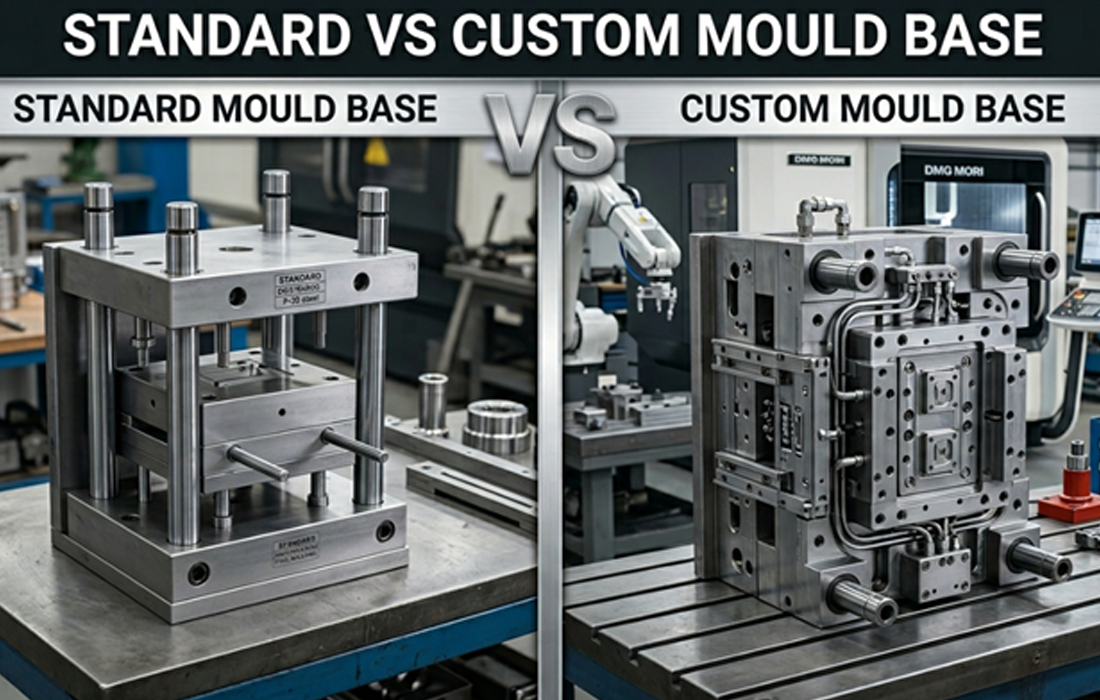
A mould base is the main structure that supports a mould in manufacturing. It holds all the important parts together an...
Read More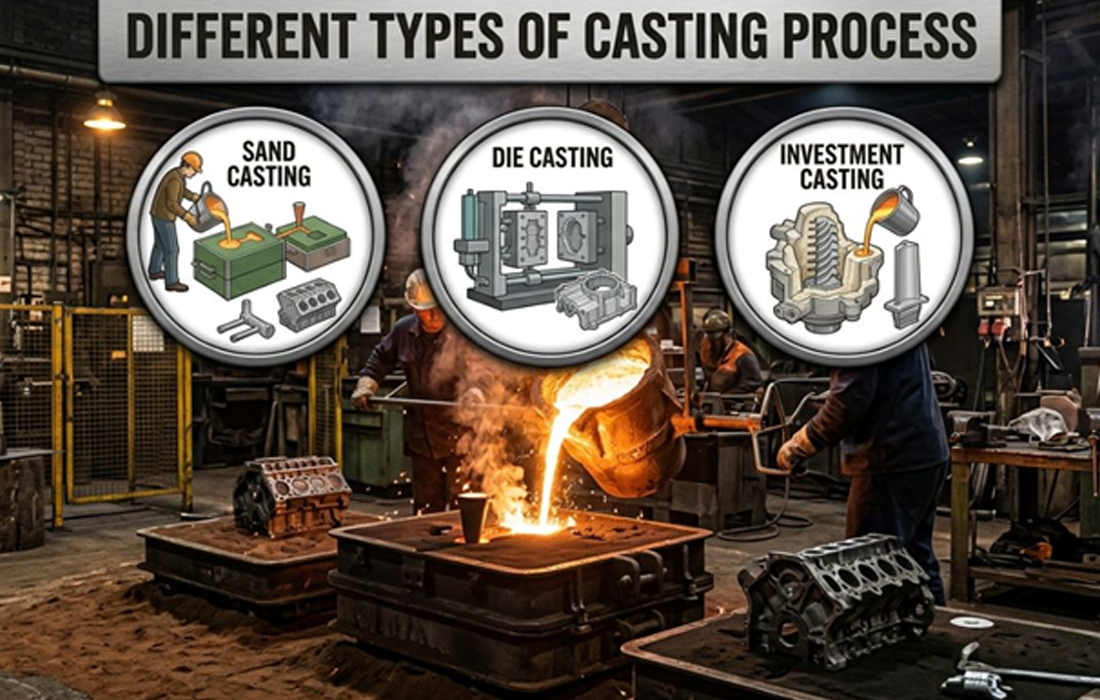
Casting is one of the oldest and most widely used manufacturing processes. It allows metal or other materials to be shap...
Read MoreManufacturing Unit 1 - Head Office (Dahisar)
14, Raju Industrial Estate, Penkar Pada Street, Near Dahisar Octroi Check Post, Post - Mira, Dist - Thana 401107ld Base
Manufacturing Unit 2 - Ambhai
Gut No. 113/1, Village Ambhai , Manor- Wada Highway, Taluka -Wada, Dist: Palghar, Maharashtra, India - 421 303
Manufacturing unit 3- Manor
Gut no.77/46,Aamgaon,Hamrapur P.O Manor Wada Highway, Tal. wada, Dist.Palghar -421303
© 2026 Kalyani Mould Base. All rights reserved.
Developed and Managed By - 